We have been working since 2008
and provide high-quality services
5
Rating based on
reviews from our
customers
Daily from 8:00 to 20:00
We have been working since 2008
and provide high-quality services
5
Rating based on
reviews from our
customers
Daily from 8:00 to 20:00
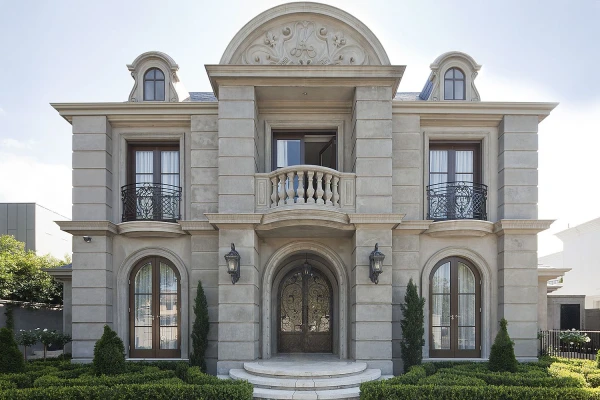
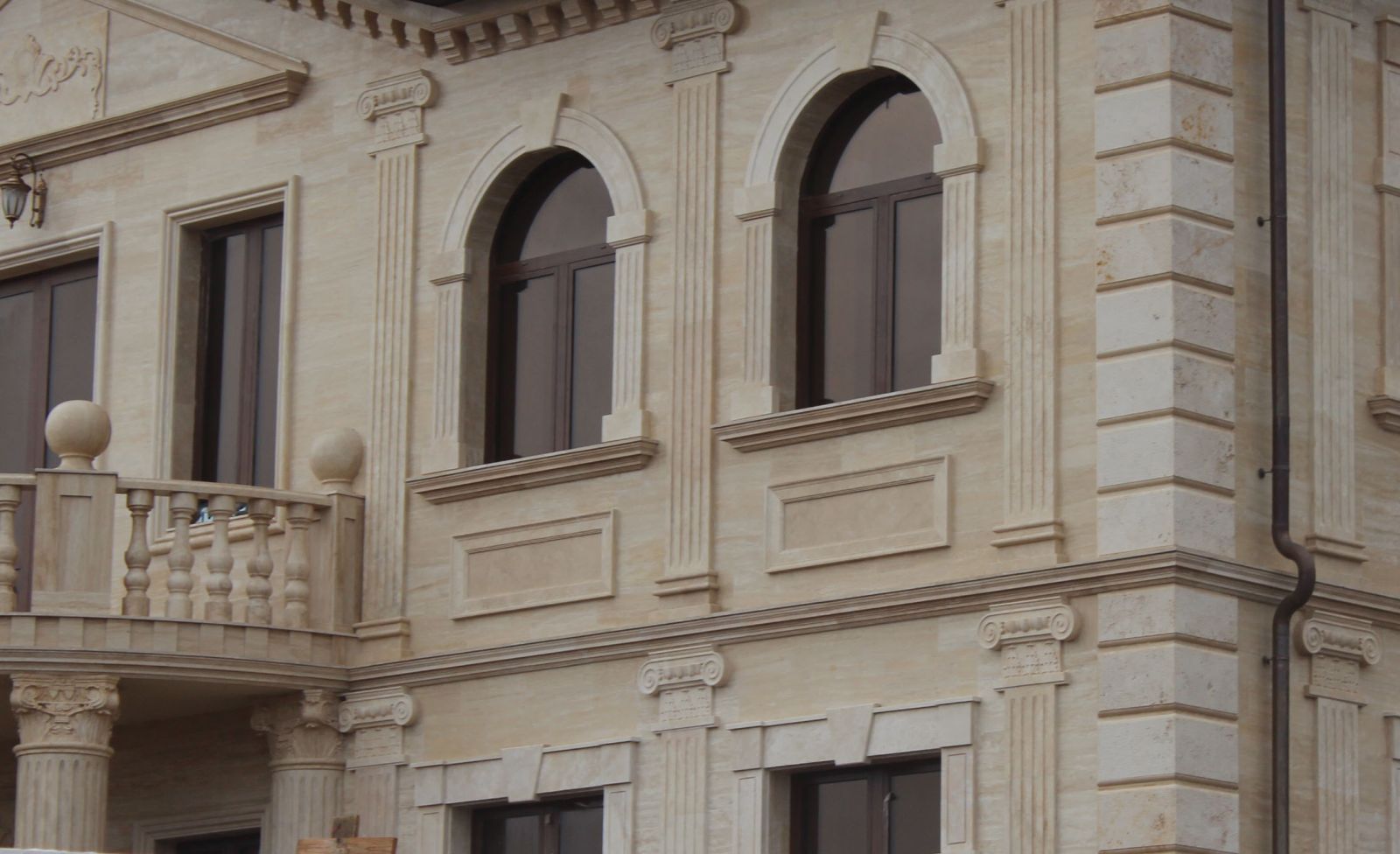
Travertine is a natural stone made of soft rocks, similar in characteristics to marble. This material is extremely popular in finishing works – it can be used both inside (travertine flooring) and outside the premises. The Colosseum and St. Peter's Basilica in the Vatican were built from it in their time. Nowadays, travertine is used in facade finishing, providing high strength and wear resistance.
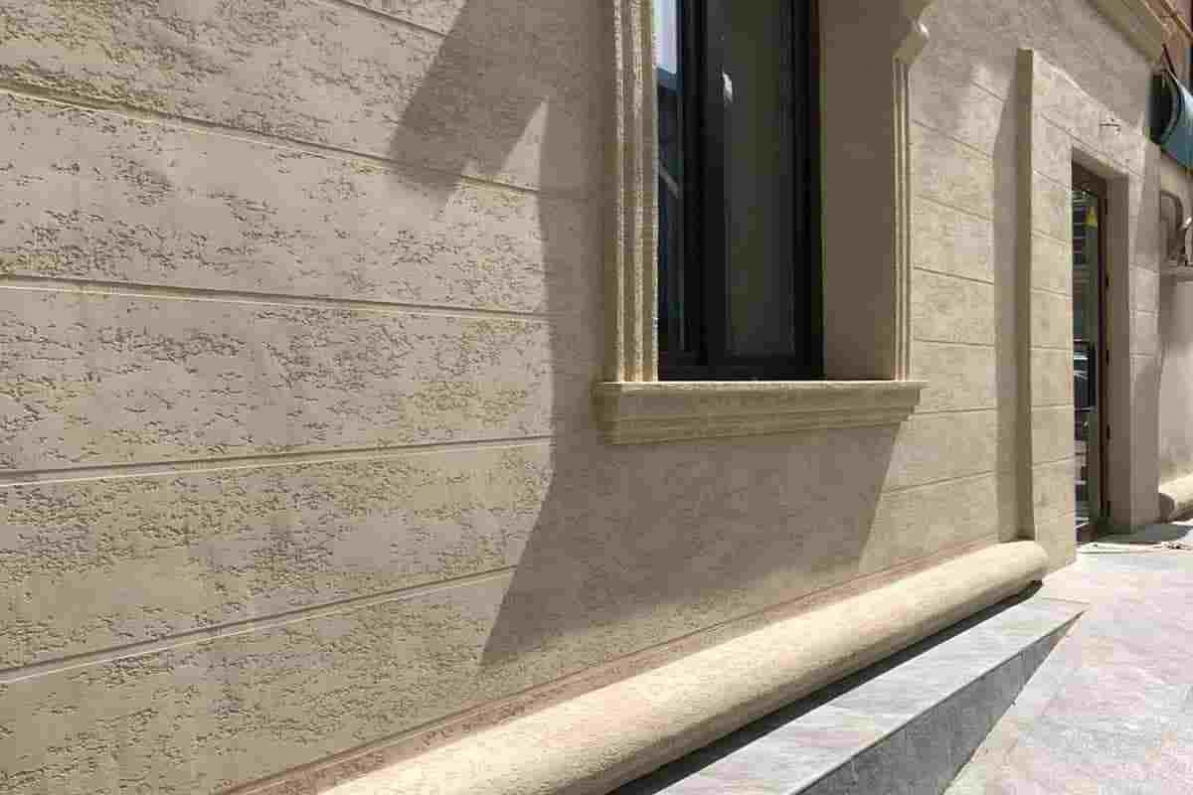
Travertine finishing involves the use of natural and artificial stone. The second option is a composition of natural material crumbs mixed with resin and glue. It is supplied in liquid, tile and decorative form. Liquid is used in interiors with stone, applied to the surface, after which it dries quickly. Travertine tiles are easy to cut, have proven themselves to be excellent when laid in the bathroom, providing resistance to fracture. The decorative format is considered a type of plaster, suggesting use as decoration and as cladding.
The composition of the stone includes minerals, calcium polycarbonate and organic matter. The density level of the material depends on the place of its formation - waterfalls or groundwater. Other features are as follows:
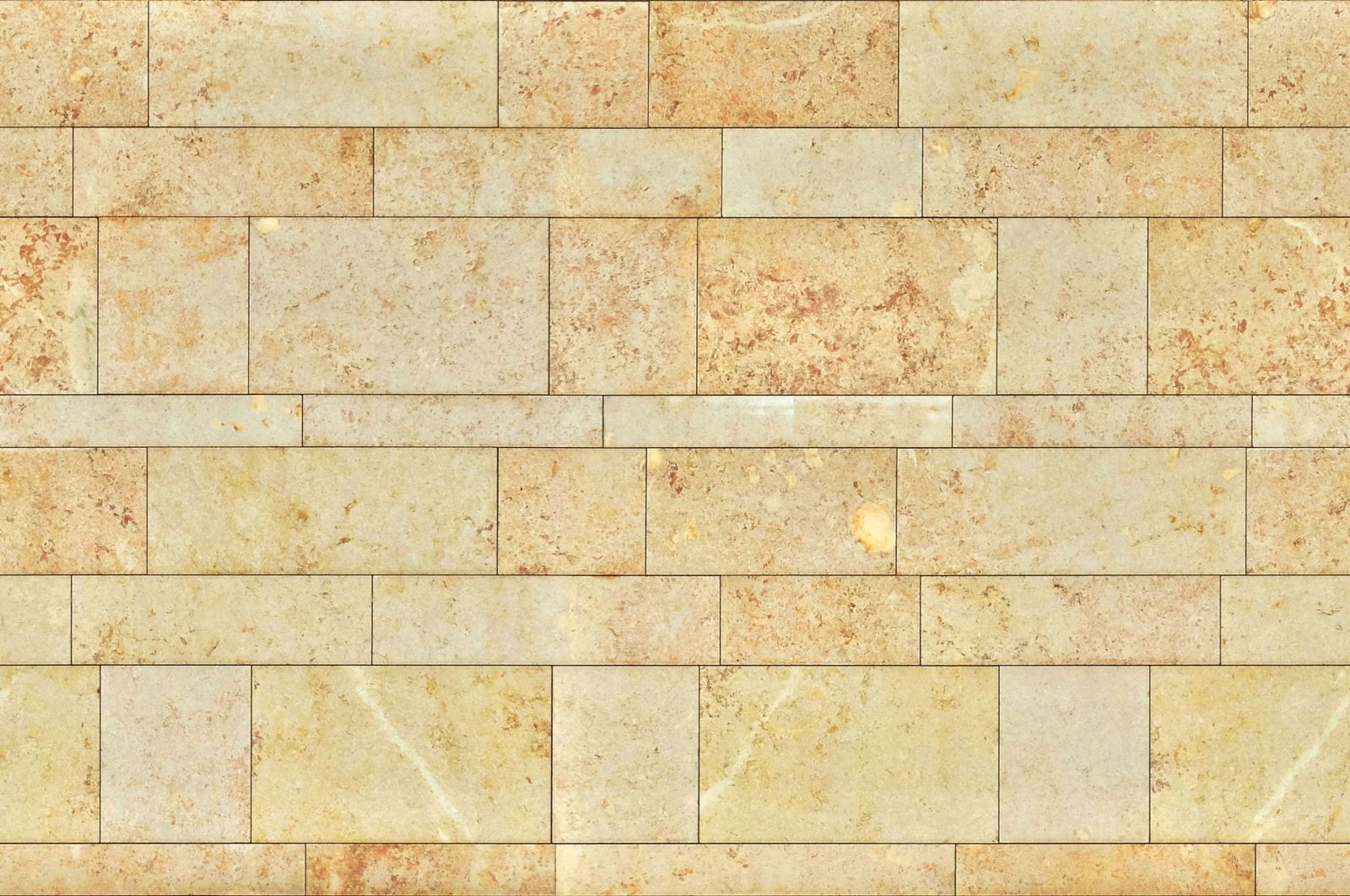
Installing tiles on a vertical surface is not an easy task. To get an effective result, you should have certain materials and adhere to the rules of installation technologies. Much attention is paid to preparing the base in the following order:
Before tiling, you need to select and sort the stone. If necessary, you can polish travertine with subsequent treatment with acrylic paint or varnish. Also, craftsmen recommend drawing up an installation diagram, having previously done a "dry laying" on the floor. The adhesive is applied locally to the wall segment where one tile is planned to be laid.
.jpg)
The installation stage involves laying the material from the bottom up. Each element is pressed into the glue with a rotating motion, compacting it with a rubber mallet. Excess glue is removed immediately. Then, decorative laying involves the following actions:
Despite the increased resistance to moisture, working with travertine in frost, heat or rain is prohibited. Otherwise, if you have certain skills, you can handle such work yourself.