We have been working since 2008
and provide high-quality services
5
Rating based on
reviews from our
customers
Daily from 8:00 to 20:00
We have been working since 2008
and provide high-quality services
5
Rating based on
reviews from our
customers
Daily from 8:00 to 20:00
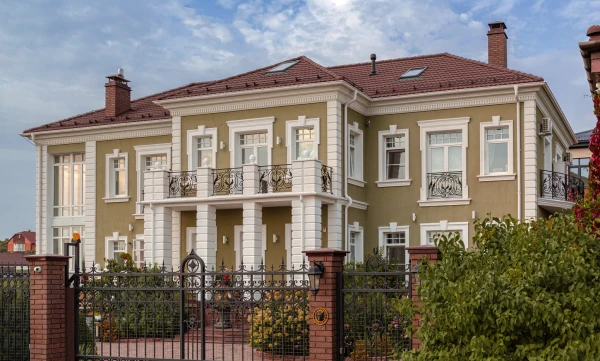
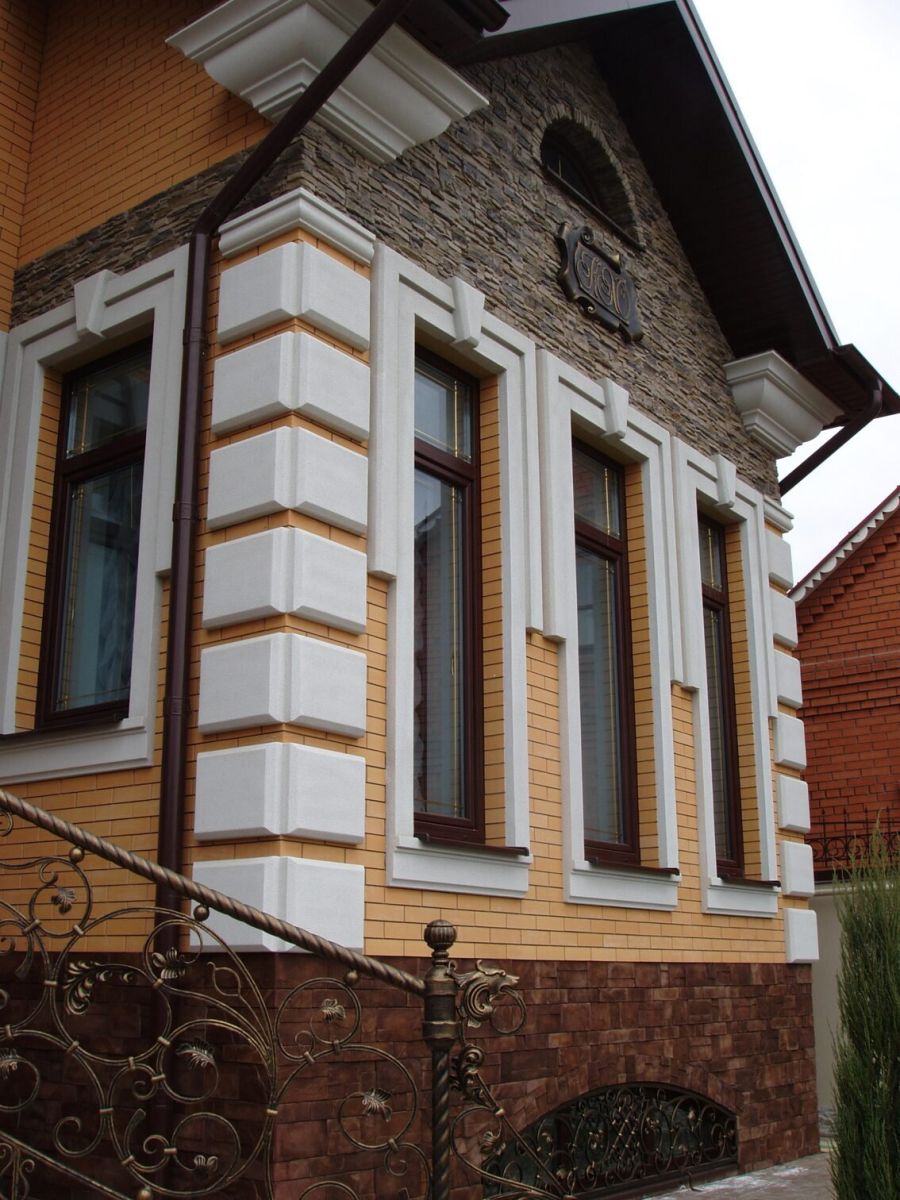
Facade decor – architectural elements that do not bear structural loads. Their basic purpose is to improve the appearance of the house. Facade stucco can often be seen on old houses. This format belongs to the category of heavy decor, providing for the use of a base made of natural materials – granite, marble, sandstone. Nowadays, facade decoration is often carried out using elements made of synthetic raw materials – most often polystyrene foam.
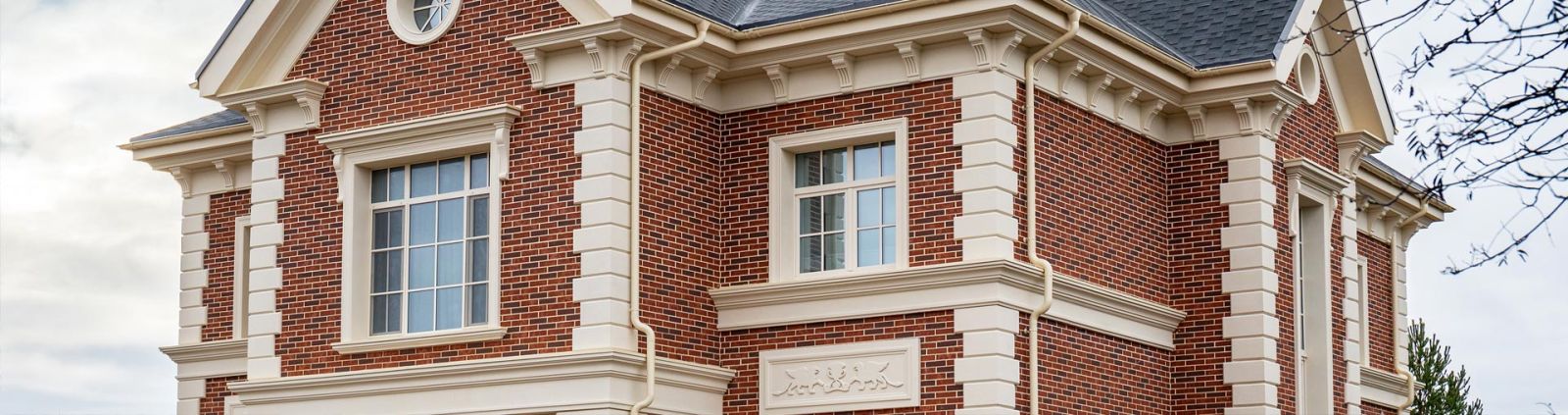
Finishing the facade with decorative elements implies a special specificity of choice. They help not only to decorate the building, but also to create the illusion of a high-rise building. A house with an original exterior immediately acquires a romantic look with the right lighting, and organically selected details emphasize the refinement of the owner's taste.
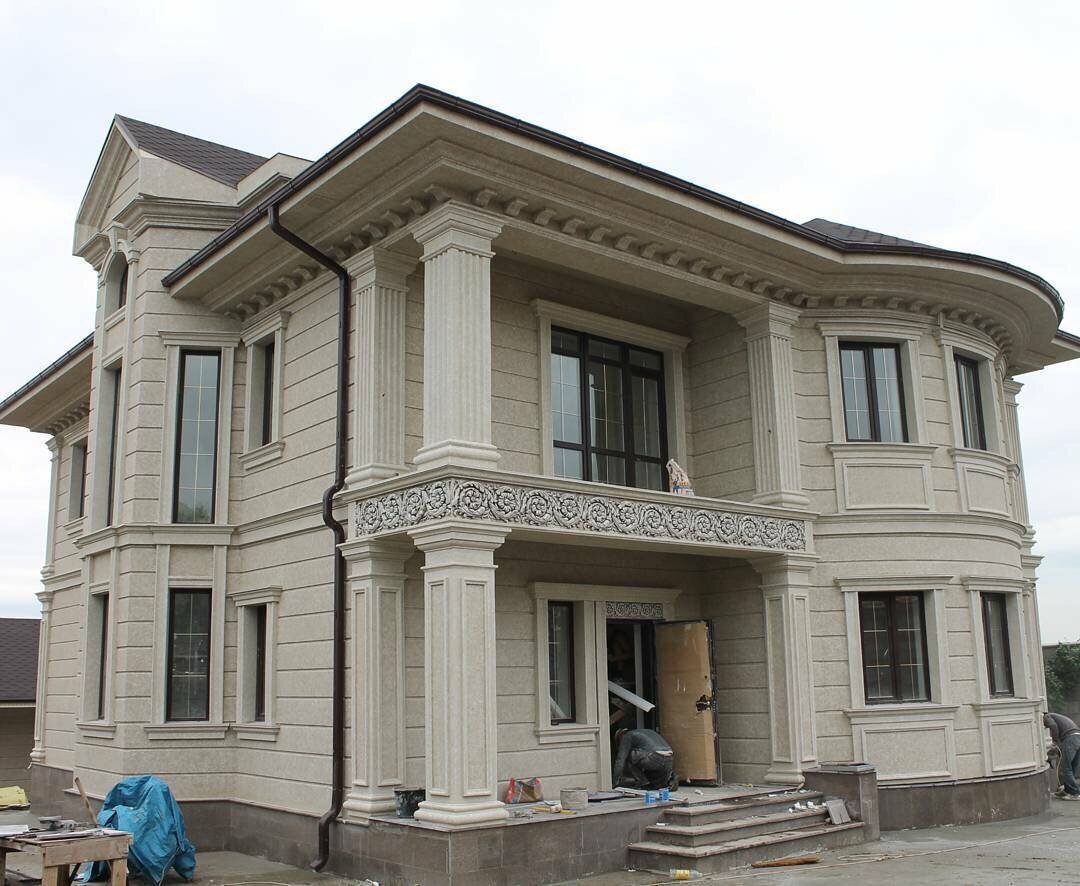
Installation of moldings on top of the base and cornices between floors will provide stylish zoning of the wall. The sandrik above the window will reliably protect from moisture, and the pediment near the roof slope will give the house a finished look. An original balustrade will allow you to create columns under the railings in a figured design. And architectural solutions in the form of bas-reliefs on the facade will emphasize the effect of luxury.
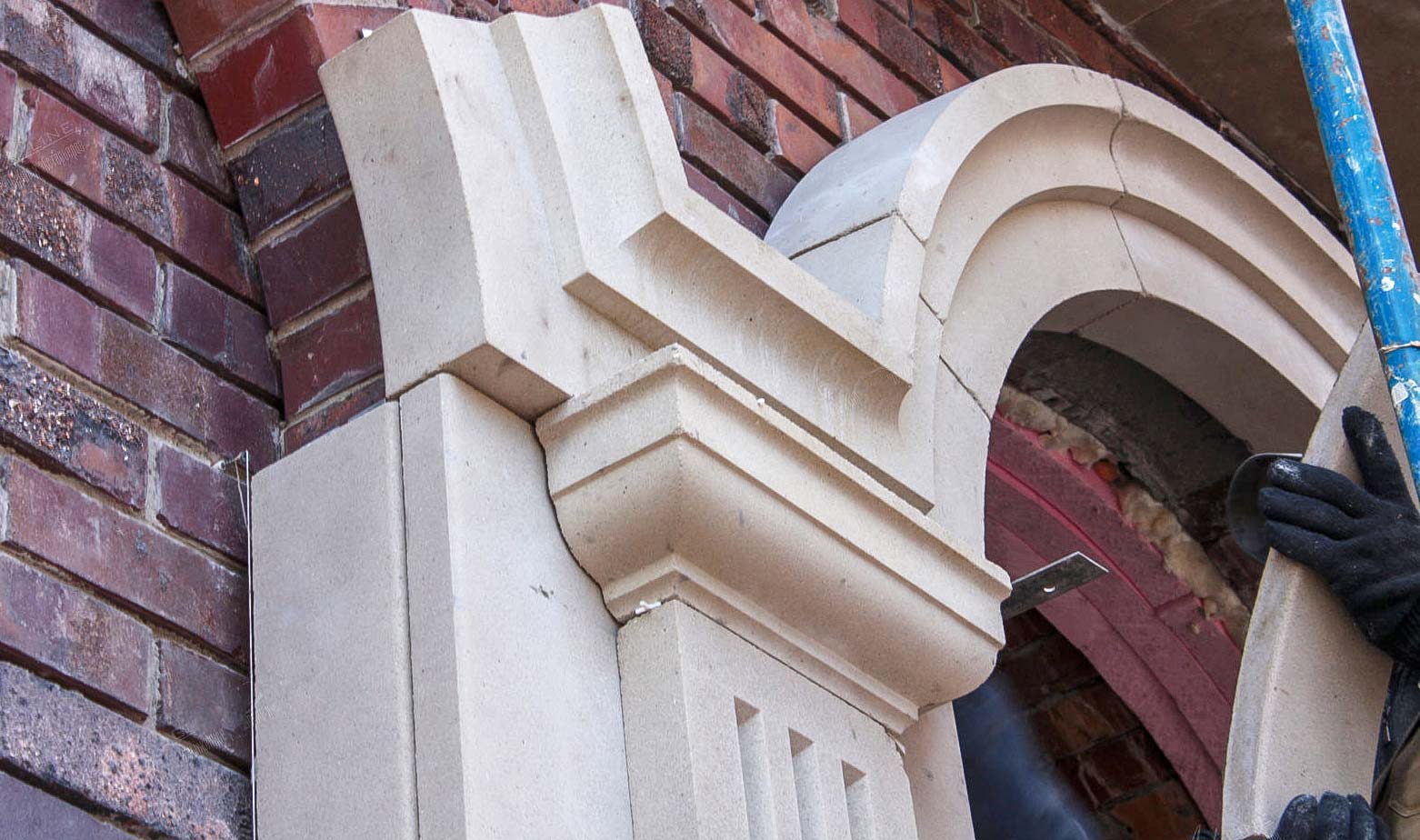
Exterior finishing works should be approached responsibly, as the finished result can be considered the face of the building. Architectural decor is presented by manufacturers in a ready-to-install form, implying classification by types. In installation works, facade elements are used in the form of moldings, cornices and architraves, window sills, pilasters, capitals, columns, rustication, keystone. The process does not require reconstruction or strengthening of the facade, as in the case of stucco decor. However, it is necessary to strictly adhere to the rules of the technology, which determines the long-term result.
The main stages of facade design work are as follows:
After the installation of decorative cornices or other exterior details, a finishing layer or plaster is applied, and the element itself is painted with special paint.
It should also be known that when arranging decorative facades, not only the quality of fixation is important. Other fundamental factors include proportionality, weather conditions, and architectural style. In this way, you can solve all sorts of design projects in a variety of ways - for example, making a facade in an antique style or adhering to the classical direction.
Before work, it is important to take a responsible approach to the selection of tools. To install decorative elements made of polyurethane, you will need special glue, sealant, silicone paint for facades, primer with quartz sand. The latter is needed to treat the surface if it is made of materials that strongly absorb moisture. The rules for applying glue under facade decorations imply the following:
For very large elements (more than 10 cm), it is recommended to use dowels or embedded parts as a retainer in parallel with the glue. In this case, holes for fasteners are pre-drilled on the back surface of the facade molding element.